
When Michael Motz traveled from Poland to Minneapolis for the Future of Food Halls Conference, he brought more than just an international perspective.
As founder of Full House Group, Michael oversees one of Central Europe's most innovative hospitality portfolios, including food halls, restaurants, bars, live music venues, and entertainment concepts across Poland and the Czech Republic. Over the past decade, his team has experimented with countless ways to attract guests, build loyalty, and create places people genuinely want to spend time.
What emerged from our conversation after the conference wasn't a discussion about technology, operations, or even food. It was a conversation about connection. And why food halls may be uniquely positioned to provide it.
Hospitality operators often think about competition in terms of nearby restaurants, entertainment venues, or emerging concepts. Michael sees it differently. The biggest competitor today isn't another venue. It's staying home.
Across Europe and North America, people are spending more time alone. Remote work has reduced many of the daily interactions that once happened naturally. Social groups have become more fragmented. Traditional gathering places are disappearing. At the same time, consumers have endless entertainment options available from the comfort of their living rooms. As a result, hospitality operators face a challenge previous generations rarely encountered. People no longer gather automatically. They need a reason.
"The question isn't whether your food is good," Michael explained. "The question is whether you've created something worth leaving the house for."
Food halls have always offered advantages that traditional restaurants cannot easily replicate. They accommodate groups with different tastes and budgets. They work for solo diners, families, coworkers, and large social gatherings. They allow guests to interact with a space in multiple ways throughout a single visit. That flexibility has helped fuel the category's growth. But Michael believes the industry's greatest strength extends beyond variety. Food halls naturally function as social infrastructure.
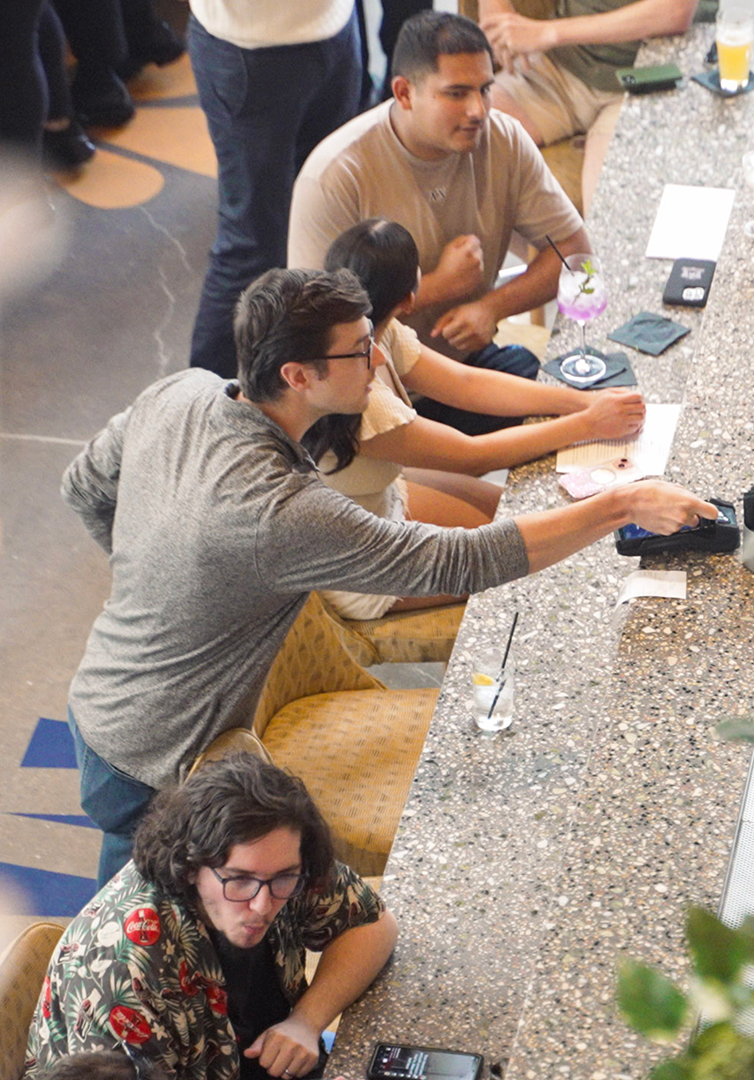
Unlike a traditional restaurant where the primary activity is dining, food halls can support multiple forms of engagement simultaneously. Guests can eat, attend an event, listen to music, participate in a workshop, meet friends, work remotely, or simply spend time in a lively environment. In an era where people increasingly crave authentic human interaction, that flexibility becomes a significant advantage.
For years, many operators viewed programming as a marketing tactic. A trivia night here. A live band there. An occasional community event. Michael believes that mindset is becoming outdated.
At Full House Group's flagship food hall, experiences are not occasional additions to the business. They are central to the business model itself. The venue hosts an almost continuous calendar of programming that includes:
The objective is simple: create reasons for people to return regularly and build relationships with the space. When guests develop routines around a venue, it becomes more than a place to purchase food and beverages. It becomes part of their social life.
One of the most memorable insights Michael shared involved live music. Many venues treat music as entertainment. His team treats it as community building.
Their flagship location hosts live performances roughly 360 days per year. Not because every performance directly drives revenue, but because consistent programming creates recurring communities. Artists bring audiences. Audiences return regularly. Friendships form. New guests discover the venue through performers. Over time, the venue becomes associated with experiences and relationships rather than transactions.
This shift is important.
The most successful hospitality venues are increasingly creating emotional connections that extend beyond food and beverage. Live music, events, and programming provide opportunities for those connections to develop.
Throughout the Future of Food Halls Conference, one theme surfaced repeatedly: food halls are evolving beyond their original role. The most successful operators are no longer thinking solely about vendor mix, occupancy rates, or guest throughput. They're asking a broader question: What role does this place play in the community?
For some operators, that means hosting networking events. For others, it means becoming a hub for local artists, musicians, makers, and entrepreneurs. Some are creating family-focused destinations. Others are building gathering places for sports fans, hobby groups, or neighborhood organizations. The common thread is that they are intentionally creating opportunities for people to connect.
In many ways, food halls are becoming a modern version of the town square—a place where people gather not because they have to, but because they want to.
The Future of Food Halls Conference featured countless discussions about technology, operations, design, and emerging business models. All of those topics matter. But Michael's perspective offered an important reminder. Technology can improve convenience. Operations can improve profitability. Vendor mix can improve guest satisfaction.
Yet the venues that create lasting impact are often the ones that help people feel connected. As hospitality operators look toward the next decade, the opportunity may not be to build bigger food halls or offer more choices. The opportunity may be to build places where relationships form, communities grow, and people feel a genuine sense of belonging.
Food halls have always been about bringing different people and experiences together under one roof.
In a world that often feels increasingly disconnected, that mission may be more valuable than ever.
Michael Motz is the founder of Full House Group, a hospitality company operating food halls, restaurants, bars, live music venues, and entertainment concepts across Poland and Central Europe. He joined food hall operators, developers, designers, and hospitality leaders from across North America at the 2026 Future of Food Halls Conference in Minneapolis.

.jpg)
.jpg)
.jpg)
.jpg)
.jpg)